
Written by
 Joshua Thompson
Article details
» 7 min read
Think Carefully Mr ChatGPT 5
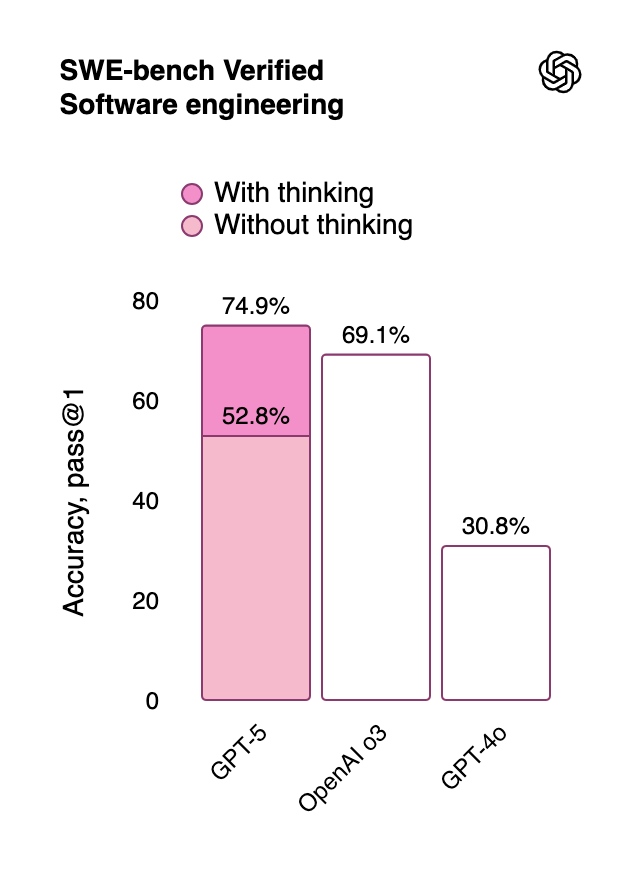
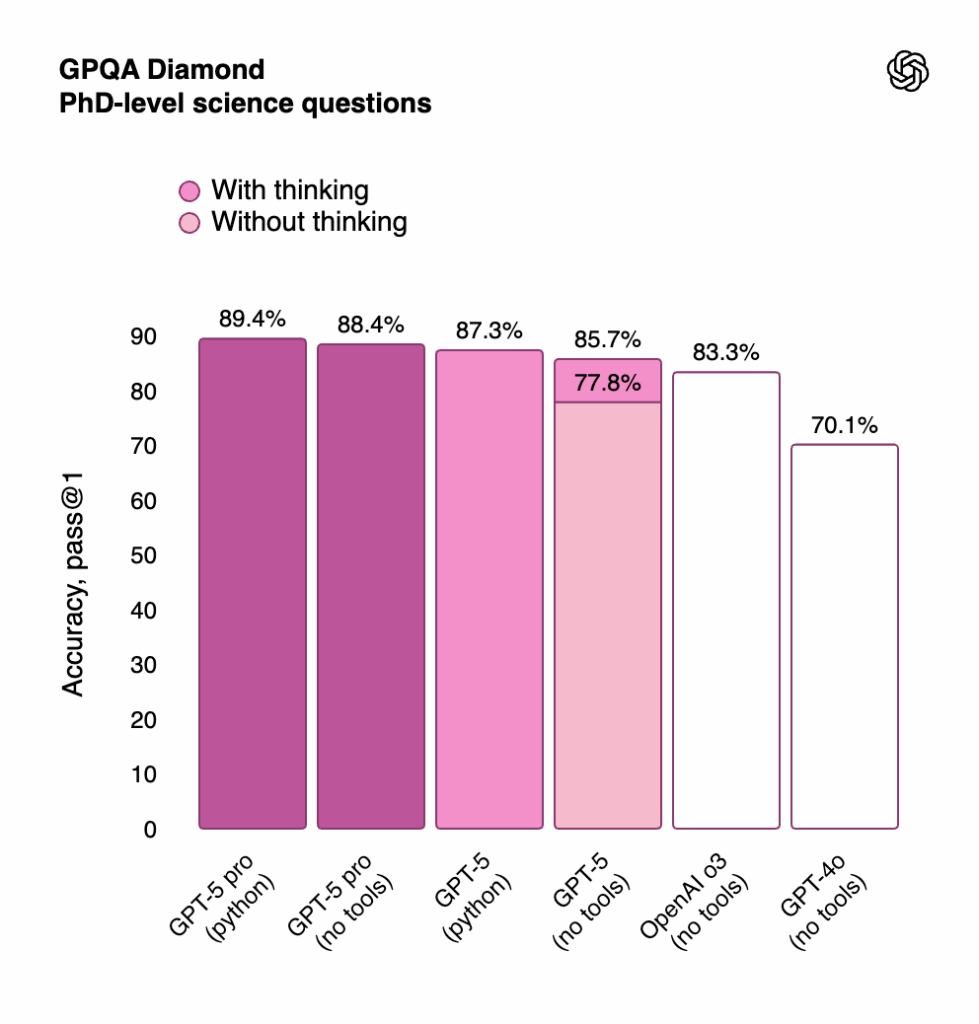
Get used to saying ‘think carefully’ or ‘think hard’ when prompting ChatGPT! When you ask ChatGPT a question it uses a unified router that decides whether to answer fast with a lightweight pass or slow down for deeper reasoning (hint – using a lightweight model saves OpenAI a lot of money)!
If you say “think carefully” or “think hard”, you give it a clear goal and add constraints, you’re signalling “take the deeper route”. If you say “answer briefly in three bullets”, you’re telling it to keep things light and quick. The trick is to match depth to the task: more depth for decisions, numbers and code changes; less depth for summaries and simple look-ups.
The Cost Narrative
Consolidation to cut serving costs
A big theme from the community: GPT-5 looks optimised for scale. The model router chooses lightweight vs reasoning modes, trims infrastructure complexity, and attempts to keep response times low. That’s great for adoption and margins, less great if you enjoyed forcing a specific model personality.
Pricing, caps and rollout confusion
One of the spicier threads on Reddit after GPT-5’s launch wasn’t about multimodality or reasoning power – it was about who could actually use it and how much they could use it.
I have been a paid user since GPT-4, and now I am considering moving to another provider (I am also a paid user of Gemini).
This cap limit is ****, and not having the capability to choose the model I want gives me rage.
Because of this, they really want to put less costs on their infrastructure, making me think that the OpenAI-Microsoft partnership isn’t going well.
u/Vas1le
From a business perspective, these quirks aren’t surprising. GPT-5 is more expensive to run than 4o, so OpenAI likely tunes caps dynamically to balance server load and cost per user. If you’re in a region where capacity is tight, or you’re hammering the service with heavy requests, you might feel the squeeze sooner than someone casually asking for dinner ideas.
What actually changed?
f you strip away the hype and marketing teasers, the most useful way to judge GPT-5 is side-by-side with its predecessor. GPT-4 set the bar for reasoning quality but relied heavily on users picking the right model for the job – a bit like having a garage full of sports cars but needing to know which one works best in the rain.
ChatGPT 4 vs ChatGPT 5
| Feature | ChatGPT-4 | ChatGPT-5 |
|---|---|---|
| Model Selection | Manual choice between 4.1, 4o, o3, etc. | Unified router auto-selects mode |
| Latency | Good, but slower on reasoning-heavy tasks | Noticeably faster across most tasks |
| Reasoning Depth | Strong with the right model selected | Mixed – routing can under or over-think |
| Knowledge Cut-off | Varies by model, mostly mid–2023 | October 2024 cut-off |
| Voice Mode | Available, but limited session use | Nearly unlimited sessions, but accuracy varies |
| Image Generation | DALL·E 3, decent prompt following | Similar quality, slightly better prompt adherence |
| Free User Access | Lower-tier model defaults | Much stronger default model for free users |
Chat GPT 5 Hype Check
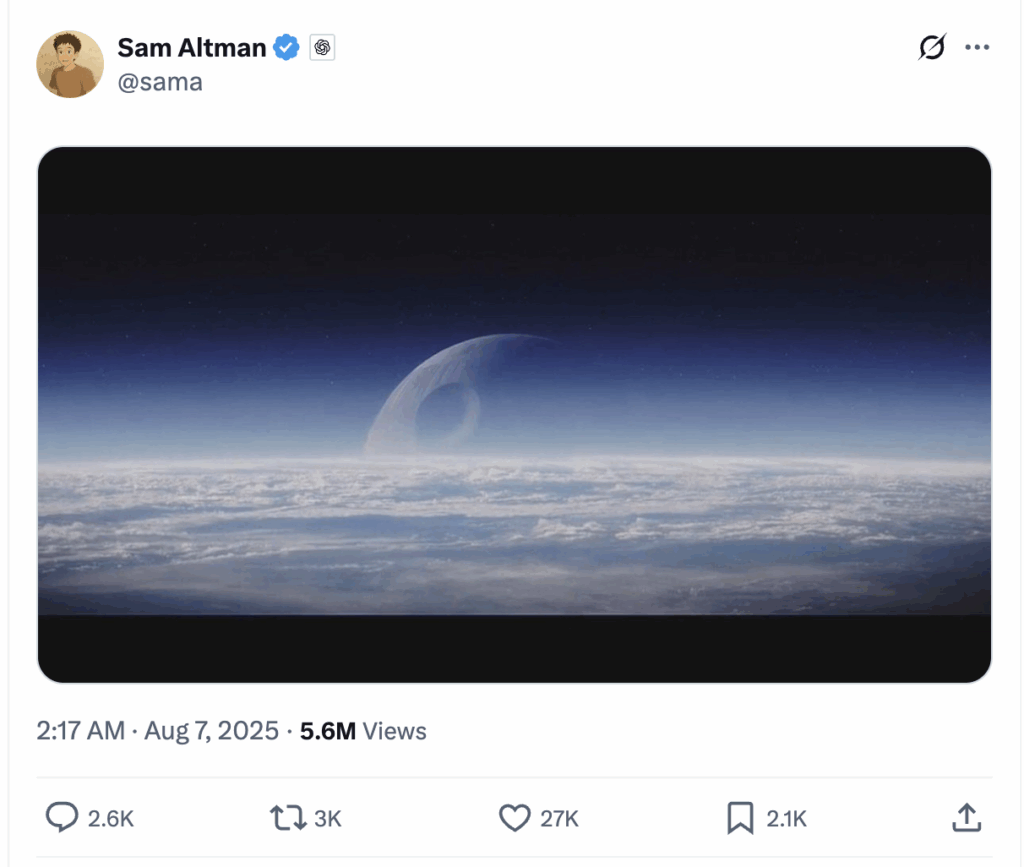
Marketing vs delivery – Death Star and expectations
OpenAI’s marketing machine rolled into GPT-5 launch week like it was premiering the next Star Wars trilogy. Sam Altman dropped the now-infamous “Death Star” teaser image… making everyone think AGI had arrived.
Then reality landed – not with a cinematic boom, but with a polite “ping” like your toaster telling you the bread is ready. GPT-5 is fast, more accessible, and neatly packaged… but it isn’t the AGI Death Star capable of levelling planets (or your job) overnight.
Do you remember the original Apple iPhone keynote? Well it made 14 year old me want an iPhone more than anything. I think we might be at the stage with OpenAI where it doesn’t have the same impact. If it really is transformational then fire up the keynote… if not then maybe hold back?
The S-curve view – incremental, not exponential
GPT-5 has made it clear: the rocket’s not out of fuel, it’s just hit the S-curve. Progress is still happening, but now it’s more steady climb than vertical take-off.
Instead of massive leaps every six months, we’re seeing refinements: faster responses, better prompt-following in some areas, small reductions in hallucinations, more consistent formatting. All useful – but none of it’s going to make you quit your job and vibe code a viral app!
Using the same iPhone analogy – think of it like upgrading from last year’s smartphone to this year’s model. The camera’s a bit better, the battery lasts a touch longer, and the screen’s a smidge brighter. It’s an improvement you’ll appreciate daily – but is it groundbreaking?

Chat GPT 5 API
I now probably have 100 automations built that call Chat GPT’s API. This really is where OpenAI will make it’s money in the long run.
To call a different model is obviously an easy switch, but there were a few tweaks that were useful:
More predictable automation with new parameters:
- verbosity – Tell GPT-5 exactly how much to say. low for short transactional replies in webhooks or Slack bots, medium for balanced context in automation logs, and high when you want GPT-5 to generate comprehensive documentation or detailed reports automatically.
- reasoning_effort – Setting this to minimal speeds up automation workflows where you don’t need the model thinking five steps ahead. For example, rapid ticket triaging, extracting key fields from an email, or producing quick summaries in real time.
- Custom tools – This is huge for automation. GPT-5 can now call your tools using plaintext instead of JSON, which reduces parsing friction. Add developer-supplied context-free grammars and you can lock responses into a specific structure – perfect for feeding into other scripts without brittle regex clean-up.
Three sizes for different workloads:
- gpt-5 – Use this for high-value automation where accuracy matters more than milliseconds – think contract review, compliance workflows, or multi-step reasoning in RPA pipelines.
- gpt-5-mini – A sweet spot for daily-use automations: CRM updates, customer email drafting, or structured lead enrichment.
- gpt-5-nano – Lightning fast for bulk, low-complexity jobs like tagging support tickets, categorising orders, or quick sentiment analysis.
Chat GPT 5 FAQs
Why can’t I choose ChatGPT models any more?
GPT-5 in ChatGPT uses a unified router that decides for you whether to run a reasoning model or a lighter one. It’s meant to keep things simple and cost-efficient, but for power users it can feel like losing manual gears in favour of an automatic. In the API, you can still pick specific GPT-5 variants.
If you are a pro user you can still select models.
Do free users get Chat GPT 5?
Yes – and that’s a big shift. Free users now default to a much stronger model than before, which is why some people on Reddit are suddenly “blown away” by what ChatGPT can do.
Why don’t I see Chat GPT 5 yet?
Rollouts aren’t instant. Depending on your region, account tier, and server load, you might still be on 4o. Try logging out, starting a fresh chat, or waiting a few days.
Is Chat GPT-4o gone for good?
In ChatGPT, yes – at least as a standalone choice. Its speedier DNA lives on inside GPT-5’s routing system. In the API, you’ll find similar performance from gpt-5-nano or gpt-5-mini for lightweight tasks.
Is Chat GPT 5 a lot faster?
Yes! Noticeably faster than GPT 4o. In some tests I’ve done, it’s twice as fast.
Does Chat GPT 5 hallucinate?
It still can do, but less than previous versions.
Does Chat GPT 5 generate images better?
Not really. The image generation is pretty much the same.
Did Chat GPT 5 finally remove the em dash (-)?
Unfortunately not! The em-dash is still prevalent. Make sure you have it saved in it’s memory not to use the em dash!
The Final Verdict on Chat GPT 5
So… is ChatGPT-5 the AI Death Star that Sam Altman’s teaser promised? Not quite. But it is a solid, tangible upgrade that makes ChatGPT faster, more accessible, and better suited for mass use.
For everyday users, it’s the strongest default OpenAI has ever shipped. Free users get a serious boost, Plus users enjoy snappier performance, and casual prompts feel more responsive than ever.
For automation and API builders (👋), the new parameters, custom tools, and tiered model sizes make GPT-5 a much more controllable and predictable engine to slot into workflows. This is where OpenAI will quietly make a fortune: in the background, powering thousands of little automations, integrations, and RPA pipelines.
For power users who loved micromanaging model selection and personality, the unified router will feel restrictive. You can still coax GPT-5 into deeper reasoning, but you’ll need to be intentional with prompts – “think carefully” is your new magic phrase.
The “wow” moments are fewer, but the day-to-day usability is better. Think less “new iPhone category” and more “best iPhone yet.”
If you came for AGI fireworks, you’ll leave underwhelmed. But if you came for faster answers, cleaner automation, and a model that quietly gets more things right more often then GPT-5 is absolutely worth your time
Tagged
Last updated
Category
AILikes
More posts
You might also enjoy
AI
What Apple’s OpenAI hiring claim says about AI ethics, IP and talent wars
Apple’s allegation against OpenAI is a useful reminder that AI talent wars are not just about salaries and prestige. They are also about prototypes, confidentiality, trust and professional boundaries.
JoshuaJuly 13, 2026
AI
Should ChatGPT Have Ads? Privacy, Trust and the Future of Monetising AI Assistants
Exploring whether ChatGPT should include ads and the implications for user privacy and trust in the future of AI monetisation
JoshuaFebruary 15, 2026
AI
Is OpenAI Headed for a Fall? Benchmarks, Economics and the 2026 Reality Check
Analyse OpenAI's challenges in benchmarks, economics, and the 2026 reality check for UK AI.
JoshuaJanuary 25, 2026
Star Rating
No ratings yet
Comments
No comments yet - start the conversation.