
Written by
 Joshua Thompson
Article details
» 15 min read
The Video & Download
Video not loading? Watch on YouTube
Before You Begin…
There’s a delicate balance when you’re starting out: do you go full-on systems mode and automate everything, or just get scrappy and ship?
I’ve been in both camps – and here’s what I’ve learned.
“You don’t need a sledgehammer to crack a nut”
If you’re building your first website or sending your first invoice, don’t spend hours designing complex automations or searching for the “perfect” CRM. Just get the job done. Simplicity wins at the start. You can always optimise later.
vs
“Systemise everything from Day 1”
But – if you’re launching something with serious potential, and you know it’s not just a hobby, thinking in systems from day one can save you a mountain of time and stress. Document your processes. Use templates. Get a basic tech stack in place.
The key is to start lean, but think long-term. Don’t over-engineer – but don’t wing it either.
A great example of something to build on Day 1, would be a WhatsApp flow.
🏢 Registering Your Business on Companies House
If you’re setting up a limited company in the UK, Companies House is your first port of call. It’s the official registrar of companies – and where your business becomes a legal entity. Setting up is straightforward and can be done entirely online. You’ll need a company name, a registered office address (this can be your accountant’s if you want to keep your home address private), and at least one director. You’ll also need to choose a SIC code that describes what your business does. The standard fee is £12, and most applications are approved within 24 hours.
Once your company is live, there are two key annual requirements you must not ignore: the confirmation statement and the annual accounts. Your confirmation statement (formerly the annual return) is a yearly update to confirm your company’s details – even if nothing has changed. It’s quick to file and costs just £34 online. If you forget to submit it, you risk fines or even having your company struck off.
Then there’s your annual accounts submission, which gives a snapshot of your company’s financial activity. For small businesses or micro-entities, you can usually submit simplified accounts – but they still need to be accurate. Your first set of accounts is due 21 months after incorporation, then annually within 9 months of your financial year end. It’s highly recommended to get an accountant involved here – mistakes can lead to penalties or HMRC headaches you don’t need.
Even if your company is dormant or hasn’t traded yet, you still need to file. So from the moment you set up your business, it’s worth putting these reminders in your calendar – or better still, working with an accountant who’ll stay on top of it all for you.
🏦 Business Bank Account for UK Small Business
One of the first things you should do after setting up your company is open a dedicated business bank account. Mixing personal and business finances is a recipe for confusion – and a nightmare for accounting. Keeping everything separate not only helps you stay organised, but also gives you a clear picture of your business performance. It also makes life easier when it comes to filing taxes or applying for funding.
We recommend Wise Business – and here’s why:
- 💷 Great exchange rates for international payments
- 📈 Earn interest on your balance
- ⚙️ Easy to integrate with tools like Xero, Stripe and Make.com
- 🚀 Quick and simple online setup – no need to visit a branch
- 💡 Transparent pricing with no hidden fees
- 🎁 Get a £45 bonus when you open and start using your account
If you’re serious about running your business like a business – this is step one. Open a dedicated account, and don’t look back.
💱 Foreign Exchange & Payments
If you’re going international or working with anyone overseas, foreign exchange fees can quietly kill your profit margin. Traditional banks often bake in sneaky markups that seem small on the surface but add up fast – especially if you’re paying out regularly.
My advice? Avoid those markups entirely. I personally use Atlantic Money for most of my international transfers – it’s simple, reliable, and gives you access to the actual exchange rate, not the bloated version your bank uses. If you’re dealing with larger sums or need more flexibility, Moneycorp is another solid option.
These platforms charge super-low flat fees and show you exactly what you’re getting. No surprises, no fluff – just fast, fair currency exchange that keeps more money in your pocket.
Trust me, when you’re running a small business, every percentage point counts. Get this right, and your margins will quietly (but confidently) thank you.
⚙️ Automations Not People
One of the smartest decisions you can make as a business owner is to stop relying on humans to do things that systems can handle better. That’s not about cutting jobs – it’s about avoiding bottlenecks. Automations don’t get tired. They don’t forget. And they don’t go on holiday.
UK Small Business Basic – Automate!
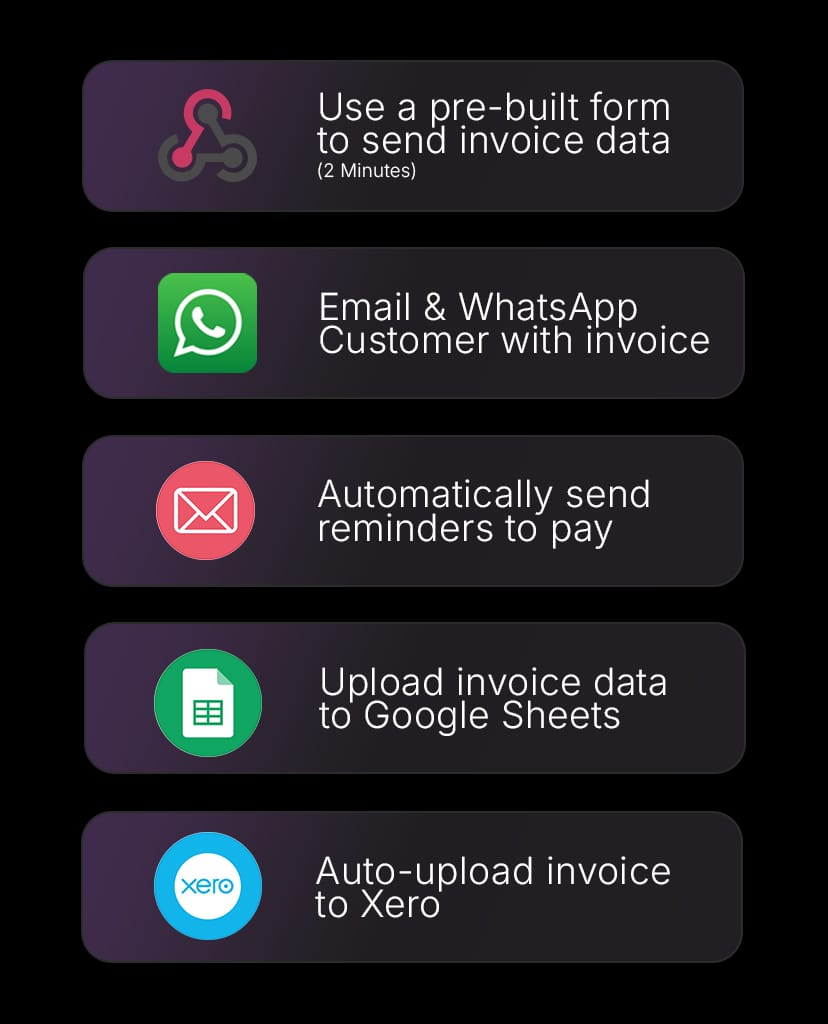
If you’re still manually sending onboarding emails, chasing invoices, or copying data from one tool to another, you’re not just wasting time – you’re building a business that won’t scale. Automate the small stuff early and your future self will thank you.
Tools like Zapier, Make and even good old Google Apps Script are your friends here. Whether it’s onboarding a new client, firing off reminders, extracting payment fees into your accounting system, or updating spreadsheets – it can almost always be automated.
The mindset shift is simple: systems scale, people burn out. Get your automation foundations in place and you’ll spend more time growing the business – not just running it.
📄 SOPs from Day 1
SOPs – or Standard Operating Procedures – are the unsung heroes of running a smooth business. If you’ve ever felt overwhelmed, dropped the ball on a repetitive task, or struggled to delegate something because “only you know how to do it,” you need SOPs. And not just when you’re scaling – from day one.
Instruction Manual
Think of SOPs as your business’s instruction manual. They’re step-by-step guides that walk through how to carry out key tasks in your business, from onboarding a new client to posting a blog, sending out invoices, or updating your CRM. It doesn’t matter how small the task seems – if it’s something you do more than once, it’s worth documenting.
When you’re a solo operator, SOPs help you stay consistent, reduce decision fatigue, and save you from having to remember every little step. As soon as you start working with freelancers, virtual assistants, or new team members, those SOPs become your training manual – cutting your onboarding time in half and helping others do things your way, right from the start.
And here’s the real win: creating SOPs forces you to think like a systems designer. You’ll naturally spot bottlenecks, duplicated effort, or outdated steps. You’ll end up streamlining the process just by writing it down. Even better, these same steps often become the foundation for automation. If you’ve written a repeatable process, chances are it’s something you can automate (or at least semi-automate).
A must for UK Small Businesses – SOPs!
An SOP doesn’t need to be fancy. It can be a Google Doc with bullet points, screenshots, or even a Loom video walking through your screen. Just make sure it lives somewhere easy to access and update (I recommend a shared Google Drive or Notion workspace).
When SOPs will save you!
- You’re off sick or on holiday and someone needs to cover your role
- You hire someone new and want them up to speed quickly
- You realise you’ve done the same task slightly differently five times in a row
- You want to pass a process over to a VA or agency
- You’re planning to sell your business (SOPs increase its value!)
Don’t wait until you’re “big enough” to start documenting. SOPs make you more efficient, more resilient, and way less stressed – and they’re the first step to building a business that runs without you.
💼 A Good Accountant
An average accountant will cost you. A bad one? Even more – through missed tax-saving opportunities, late filing penalties, and poor financial planning. But a great accountant? They’ll not only keep you compliant, they’ll actively help your business grow. In many ways, they become a financial co-pilot.
First, understand this: your accountant is not just someone who submits your annual accounts. They’re a key business advisor. They should help you plan your tax strategy, manage cash flow, understand your financial reports, and even make hiring, spending, and reinvestment decisions.
Choosing the right accountant
Choosing the right accountant starts with clarity around your business type and growth ambitions. Are you a sole trader or limited company? Do you sell digital services, run an e-commerce brand, or offer consultancy? Make sure your accountant has experience in your sector and understands the nuances. For example, if you’re in tech or creative industries, you may qualify for R&D tax credits – a good accountant will help you claim these. If you’re hiring freelancers or working overseas, they’ll help you navigate IR35 or FX tax implications.
A great accountant will:
- Help you decide how to pay yourself – salary, dividends, bonuses – based on your tax bracket and goals
- Ensure you make the most of allowances (e.g. annual investment allowance, capital gains exemption, etc.)
- Structure your business tax-efficiently – including the decision to remain sole trader or incorporate
- Advise on VAT thresholds and whether to opt into schemes like the Flat Rate VAT Scheme
- Provide cash flow forecasts to help you avoid financial surprises
Are they ‘on it’?
But beyond knowledge, the way they work matters too. Choose someone proactive. You want an accountant who reminds you of deadlines and sends updates about regulatory changes, not one who’s only in touch when it’s time to submit a return. And avoid those who just ‘do the books’ without offering insight. If all you’re getting is a tax return once a year, you’re missing out on serious value.
As a founder, you’re busy. So your accountant should make your life easier, not harder. Ask if they use cloud accounting tools like Xero or FreeAgent so you can stay organised and check reports on the go. Bonus points if they integrate with your bank feeds and send you monthly management reports.
A few red flags to watch out for:
- They’re slow to respond
- They can’t explain things in plain English
- They only talk to you once a year
- They don’t understand digital tools or automation
Personal Referrals
So, how do you find the right accountant? Ask around – word of mouth is gold. Speak to other founders at a similar stage and ask who they trust. Then shortlist two or three and set up calls. Don’t be afraid to ask direct questions about how they’d support you, how they communicate, and what they include in their pricing.
Your accountant shouldn’t just save you money on tax – they should save you time, reduce stress, and help you grow smarter. When you find the right one, they’ll quickly become one of your most valuable business allies.
🛡️ Insurance, Terms & Privacy Policy
If you take just one thing away from this post, let it be this: cover yourself from day one. Seriously. It’s all fun and games until something goes wrong – and in business, sooner or later, something will.
Insurance
First up: insurance. If you’re hiring, even just one person, Employers’ Liability Insurance isn’t optional – it’s a legal requirement in the UK. Public Liability Insurance is also worth considering if clients or the general public ever interact with your business in person. And depending on your niche, you might want to explore Professional Indemnity Insurance, Cyber Liability, or even Product Insurance. Don’t wait for a legal letter to start thinking about this.
The Important Stuff
Then there’s your legal framework. Every business needs the basics in place: Terms and Conditions, a clear Privacy Policy (especially if you collect any kind of user data), and airtight contracts for clients, suppliers and freelancers. Yes, it’s admin. Yes, you can copy templates online (just be careful). But having these documents ready will save you an enormous amount of stress – and money – if anything ever goes sideways.
Get your contracts in!
Here’s a common trap: a small business has a casual agreement with a client. A payment is late. There’s no written contract. The client disappears. Without a signed agreement that outlines late payment terms, delivery deadlines, and scope of work, it’s almost impossible to recover that income. That’s the moment founders kick themselves – don’t let it be you.
Privacy Policy
Your Privacy Policy, in particular, has never been more important. With GDPR still very much active, and cookie tracking tightening further across platforms, you need to be upfront about what data you collect, why you collect it, and how it’s stored. If you’re running lead forms, newsletter sign-ups or even analytics – this matters.
And no, legal stuff doesn’t have to cost a fortune. There are great platforms like LawBite that offer affordable templates reviewed by real solicitors. Alternatively, speak to a local solicitor for a simple startup package. It’ll likely cost less than you think – and far less than a dispute.
Think of this as your safety net. You don’t insure your house expecting it to burn down – you do it because you’re not willing to lose it. Same goes for your business. Prevention > cure, every time.
📇 Client Database
If there’s one thing I’ve learned in business, it’s this: people buy from people. Relationships drive revenue. It doesn’t matter how polished your brand is or how clever your marketing – if you don’t build genuine connections with the people you serve, growth will always be a grind.
UK Small Business Basics – Get a List!
That’s why setting up a client database should be one of the first things you do – even before you think you “need” one. Don’t overcomplicate it. You don’t need a fully-fledged CRM to begin with. A basic Google Sheet will do the job just fine. The key thing is that you start recording every meaningful interaction: who you spoke to, what was said, when you should follow up, and any notes that will help you stay personal and relevant.
Your client database isn’t just a contact list – it’s your memory bank. It’s the thing that reminds you, “Hey, Sarah mentioned she’s launching her product in May” or “Tom prefers calls over emails” or “follow up with Lucy after her holiday in Spain”. These small details are what separate good businesses from great ones. Because clients notice when you remember. And they appreciate it.
And don’t make the mistake of thinking it’s only for paying clients. Track everyone – leads, referrals, collaborators, suppliers, mentors. Anyone you’ve interacted with that could be relevant to your business. Because relationships have a funny way of circling back. A casual chat in a networking event today could turn into a major deal 12 months from now. But only if you remember who they are.
As you grow, you’ll want to transition to a proper CRM tool – something like HubSpot, Zoho, Streak (for Gmail), or Pipedrive. These systems help you automate follow-ups, track deal stages, and segment contacts by type or industry. But don’t wait for the “perfect tool” to get started. The perfect tool is the one you use consistently.
The truth is, businesses that treat every interaction like it matters tend to win. Whether you’re following up on a proposal, checking in after a quiet period, or sending a happy birthday message – your database is the engine that powers it. It keeps your conversations warm, your pipeline full, and your relationships alive.
Fields of CRM Dreams!
So take the time to set it up properly. Create fields that matter to your business (not just name and email). Use it daily. Update it religiously. And don’t wait until things get busy to realise you should’ve started sooner. Your future self – and your future profits – will thank you.
📧 Business Email & Domain
First impressions matter – and sending quotes, invoices, or newsletters from @gmail.com isn’t the best look. A professional email address tells people you’re serious, you’re legit, and you care about how you show up.
- ✅ Get a custom domain email (e.g.
[email protected]) – it instantly boosts credibility. - 💡 Try Cloudways or Namecheap Email Hosting – both offer email from just $1/month.
- 🛠 Your domain can be set up through providers like GoDaddy, 123 Reg, or Google Domains.
- 🔒 It also gives you control – if you move providers, you still own your brand email.
- 📩 Use this for all client communication, forms, invoicing and your CRM – consistent contact builds trust.
If you’re still using [email protected], take 20 minutes, set up your own domain and make the switch. You’ll thank yourself when your next lead replies with, “Loved your site – great to hear from you!”
👥 Your First Hire
Hiring for the first time is exciting – and scary. But it doesn’t mean jumping straight into payroll, pensions, and employment law. Instead, make your first hire a contractor. Why? Because it gives you flexibility, lowers risk, and keeps your overheads lean while you figure out what your business truly needs.
It’s important to understand the difference between an employee and a contractor. Contractors work independently, on their own terms – you’re paying for outcomes, not hours. That means you can test things, see what works, and iterate fast. Yes, it might be clunky at first – but going through that pain teaches you what systems and support you really need.
Don’t overlook overseas talent. Sites like Fiverr, Upwork, and even job boards like Indeed can connect you with skilled professionals at a range of budgets. Just be clear, kind, and precise with your briefs – and you’ll find brilliant people who can help move your business forward.
💼 Contractor vs Employee: Quick Comparison
| Contractor | Employee | |
|---|---|---|
| Legal Status | Self-employed (works for themselves) | Employed by you (under a contract of employment) |
| Flexibility | High – hired for specific tasks or projects | Low – tied to fixed hours, roles and responsibilities |
| Tax & NI | Contractor handles their own | You must deduct PAYE and National Insurance |
| Tools & Resources | Usually provides their own | You provide everything they need |
| Termination | Easy – just end the contract | More complex – must follow employment law |
| Cost | May charge more per hour – but no extra costs | Lower hourly pay – but higher overall due to overheads |
📌 Conclusion: Building Your Business on Solid Ground
Starting a business can feel overwhelming – but it doesn’t have to be chaotic. With a bit of structure and a few smart decisions early on, you’ll set the tone for everything that follows. Whether you’re selling a product, offering a service, or doing something completely niche – the same foundations apply.
This guide is not about perfection – it’s about practicality. It’s about setting up systems that give you freedom, not friction. It’s about working smarter, not harder. And most importantly, it’s about creating a business that works for you.
As you move forward:
- Keep it lean – You don’t need to do everything at once.
- Systemise early – SOPs and automation save time, money, and sanity.
- Think long-term – Build with sustainability and compliance in mind.
- Value relationships – People buy from people, not logos.
- Invest in the right help – A good accountant or legal advisor pays for themselves.
- Track everything – From clients to expenses, visibility = control.
- Stay curious – Business isn’t static. Keep learning, testing, and improving.
Remember: big businesses are just small businesses that got the basics right.
So whether you’re day 1 into your journey or a few months down the line – take what you need, skip what you don’t, and build something you’re proud of.
You’ve got this.
Tagged
Last updated
Category
InvestingLikes
More posts
You might also enjoy
Investing
Capital Limited backs raised 2026 revenue guidance after strong Q3 growth
Capital Limited's Q3 revenue rose 23.2% to $115.7 million, supported by mining and MSALABS as the group backed higher 2026 guidance.
JoshuaOctober 15, 2026
Investing
Ramsdens reiterates £32m-£35m FY26 profit target as gold buying booms
Ramsdens has reiterated its £32m-£35m FY26 profit forecast, supported by booming precious metals profits and a larger pawn loan book.
JoshuaOctober 12, 2026
Investing
AI Financing Boom: How to Separate Durable Bank Earnings From Market Hype
Busy capital markets can generate substantial fees for banks, but they do not prove that every AI-related investment will succeed. Here is how UK investors can assess earnings quality, financing risk and valuation.
JoshuaOctober 12, 2026
Star Rating
No ratings yet
Comments
No comments yet - start the conversation.